
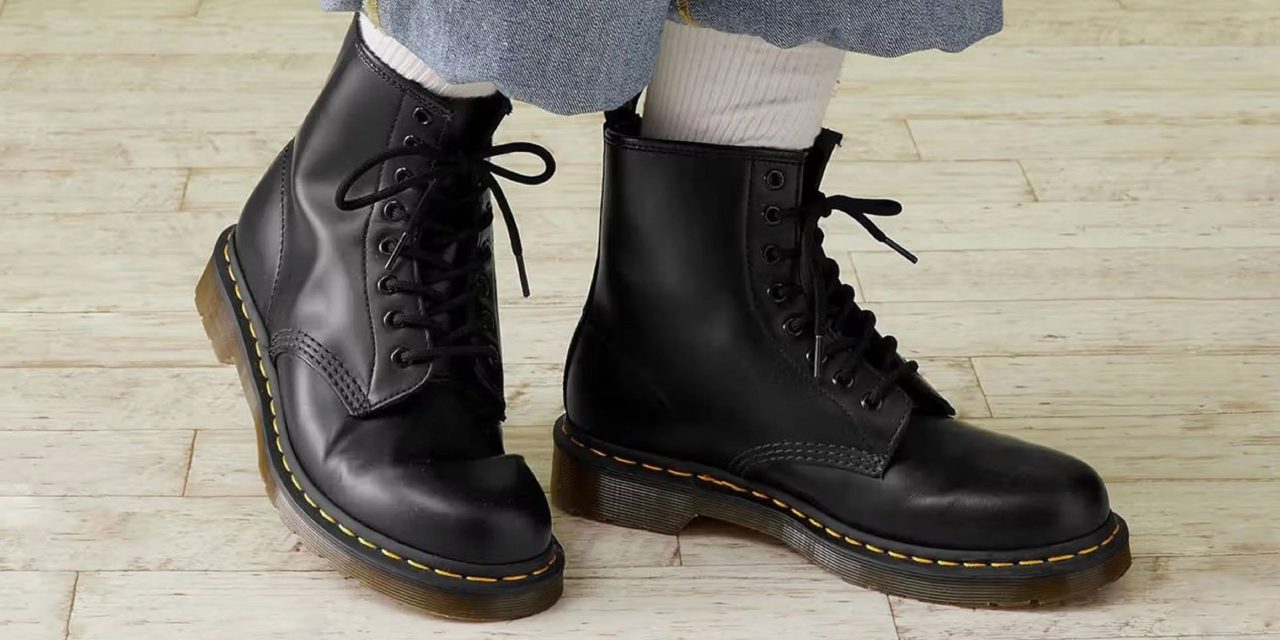
Dr. Martens has reported that its profits have fallen by more than 90 per cent in the last year, after posting pre-tax profits, external for the year to March 2025 of £8.8 million; the figure for the previous year was £93 million.
The brand’s underlying profits in the year to March, excluding anything exceptional or non-recurring, dropped from £97.2 million to £34.1 million.
The group said sales to consumers in the US started to grow in the second half of the year and had continued to increase, but UK revenues had remained lower since the year-end “due to a challenging market”.
“Our single focus in FY25 was to bring stability back to Dr. Martens,” said CEO, Ije Nwokorie. “We have achieved this by returning our direct-to-consumer channel in the Americas back to growth, resetting our marketing approach to focus relentlessly on our products, delivering cost savings, and significantly strengthening our balance sheet.
“I am laser-focused on day-to-day execution, managing costs and maintaining our operational discipline while we navigate the current macroeconomic uncertainties.”
Despite this, Dr Martens said it expected underlying profits to rise “significantly” over the financial year ahead, with analysts expecting a jump of between £54 million and £74 million.
The Northamptonshire-based company recently introduced its new strategy, Levers For Growth, where the business will shift “from a channel-first to a consumer-first mindset”.
“We will give more people more reasons to buy more of our products, whether that’s our iconic boots and shoes, or adjacent categories such as sandals, bags and leather goods,” Mr Nwokorie added. “And we will tailor distribution to each market, blending DTC and B2B, optimising brand reach and ensuring a better use of capital.
“Over the medium-term, we expect to deliver sustainable, profitable revenue growth above the rate of the relevant footwear market.”
The now-famous Dr Martens design originated in Germany in the 1940s and production started in the UK in 1959, when the Northamptonshire-based Griggs Group bought the patent rights.
By the 1970s, with the emergence of glam, punk and early “goth” styles, the classic 1460 boot had become a staple for many and a symbol of self-expression at the very heart of British youth culture.


